Following the Transformation of Ferragamo Bag Design Over the Generations
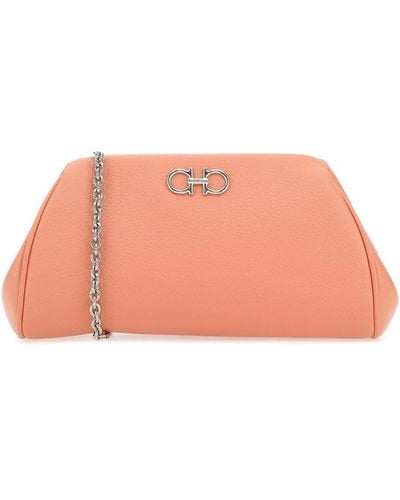
Long before handbags came onto the scene, Salvatore Ferragamo had already established his name on shoes—yet the label’s approach to bag design holds onto those very obsessions that earned him his renown: anatomy, balance, and construction respectful of how someone actually moves through their day. Following the evolution of the Ferragamo bag means tracing shifts in how women labored, traveled, and styled themselves across nearly a century. It isn’t just a timeline of shapes and hardware; rather, it goes deeper. It is a record of how a Florentine workshop responded to changing lives while holding firm to its own craft standards. Whoever browses a Ferragamo shop today is met with the gathered fruit of decades of small, deliberate adjustments rather than abrupt overhauls.
The discipline behind it is what renders this evolution worth studying. Numerous luxury maisons run hard after fleeting fashion cycles, rolling out and pulling styles within a season or two. Historically, Ferragamo bags have taken a more gradual path, prioritizing structural polish above newness. This restraint is evident in items still consulted by design teams today, decades after their original release. It also explains why older Salvatore Ferragamo bags continue to be collectible rather than passé.
1940s to 1960s: The Formative Beginnings
Handbags emerged as a significant piece of Salvatore Ferragamo’s business in the following decades following the opening of his atelier in Florence in 1927, growing out of the same leather expertise used in footwear.
Compact, structured, and built around a single dominant handle or clasp, the brand’s earliest bags from the 1940s and 1950s mirrored the post-war leaning toward function rather than decoration.
Stiff metal fastenings on structured frame-style bags were prevalent, mirroring the era’s formal-dress shapes.
Among European and American clients who demanded craftsmanship rivaling couture-grade footwear, the maison had, come the 1950s, earned a name for itself. Leather selection was already a matter of distinction, with vegetable-tanned leathers procured through Tuscan tanneries that Ferragamo maintained https://ferragamobag.com/ close relationships with. This detail still carries weight: a great many of today’s Salvatore Ferragamo bags can trace their approach to sourcing leather to these same regional supply chains.
That decade introduced easier, less rigid silhouettes as fashion loosened up its clamp on formal, exacting construction.
Gentler, hobo-inspired outlines began surfacing alongside the rigid frame-style pieces, signposting the first real stylistic split in the lineup.
Ever since, the brand has time and again returned to a design duality — structured versus soft — first planted in this decade.
The 1970s-1980s era: Signature Hardware and Assertive Visual Identity
In the 1970s era drove the Ferragamo bag lineup toward bolder brand signaling. Gold-tone hardware, the Gancini clasp, and visible metal fittings turned into design anchors rather than afterthoughts. Originating on footwear before crossing over to bags, this horseshoe-shaped clasp inspired by architectural ironwork Ferragamo admired in Florence still stands as one of the most iconic hardware elements within the ferragamo bags lineup today.
Bag proportions ballooned through the 1980s, as fashion embraced maximalism. Boxy-framed totes and structured top-handle bags with attention-grabbing Gancini clasps became a marker of status in Milan, Rome, and New York alike. The concept of the Ferragamo bag as a readily identifiable piece rather than a merely practical item was solidified throughout this period — something you could identify from the far side of a room by its hardware outline alone.
It’s worth noting that this era also expanded the brand’s international retail footprint significantly, with boutiques opening across the US and Asia. That expansion meant bag design had to satisfy a wider range of climates, dress codes, and carrying habits, which nudged the house toward more versatile sizing than the rigid, single-purpose bags of the 1950s.
The Nineties and 2000s era: Pared-Back Style Meets Function
With the 1990s came a pronounced style reset. Runways were ruled by pared-back tailoring, and handbag design tracked the same direction. While the Gancini held on, merely becoming smaller and more discreet on many styles, Ferragamo had already answered the correction through purer silhouettes, sleeker leathers, and more restrained hardware.
The 2000s saw the introduction of more overtly structured top-handle bags aimed at a professional, jet-setting clientele. This is arguably when the modern template for what shoppers now search as “best ferragamo bags” started taking shape: mid-size, structured, with a clear hardware signature and enough versatility to move between office and evening use. Craftsmanship details like hand-stitched edges and reinforced base panels became standard rather than exceptional.
Substantial growth occurred in leather variety over this stretch. Saffiano-textured leather options, sleek calfskin, and suede choices all entered rotation, offering the identical form several identities according to the surface treatment. Such versatility is part of why some shapes from the 2000s have held up well enough to still appear, in a refreshed form, in today’s collections.
In the 2010s, the It-Bag Strategy Came Into Its Own
Maisons like Chanel and Céline had already proven the market pull of the “it-bag marketplace”, and in the 2010s, Ferragamo made its most calculated move into that space. It became standard for named bag lines to receive consistent, seasonal updates, giving repeat customers a reason to return to the Ferragamo shop annually rather than treating a bag as a one-time investment.
This ten-year stretch also witnessed color emerge as a bolder design tool. In contrast to when earlier decades relied mostly on black, cognac, and neutral tones, the brand’s 2010s bag lines brought in saturated seasonal colorways — reds, cobalt blues, and pastels — commonly set against the same structured silhouettes that had shaped earlier decades. The Gancini clasp was reintroduced in bolder, more sculptural forms, sometimes enlarged to become the visual centerpiece of the bag rather than a subtle detail.
Working alongside contemporary creative direction also sharpened the brand’s runway-to-retail pipeline. In line with the wider industry push to shorten the gap between design and commercial availability, runway-shown pieces made it to stores faster than before.
2020s Into 2026: Structure, Sustainable Practice, and the Revival of the Archive
As 2026 approaches, Ferragamo’s design vocabulary for bags sits at an interesting intersection: archive revival meets contemporary material responsibility. Several current lines borrow silhouette cues directly from 1950s and 1970s frame bags, reissued with updated proportions suited to how people actually carry belongings now — phones, cards, minimal daily essentials rather than bulky wallets and compacts.
Material sourcing has also become a stated priority, with increased use of traceable leather and more transparent supply chain communication compared to earlier decades. This doesn’t mean a wholesale reinvention of manufacturing, but it does reflect an industry-wide expectation that luxury buyers in 2026 want more information about where their salvatore ferragamo bags actually come from.
The Gancini stays a steady presence across new releases, showing up in matte, polished, and oversized variations depending on the line. Strategically, this consistency offers new customers an easy way into the label’s identity, and at the same time offering longtime buyers a recognizable thread across bag shapes that are otherwise quite distinct.
Comparing Design Eras at a Glance
| Time Period | Dominant Silhouette | Defining Feature | Typical Use Case |
|---|---|---|---|
| 1940s–1950s | Structured frame bags | Rigid metal clasp | Dressy daytime wear |
| 1960s | Loose hobo forms | Understated fittings | Easygoing daily carry |
| 1970s–1980s | Structured totes with top-handles | Bold Gancini clasp | Displaying status |
| 1990s–2000s | Refined structured silhouettes | Discreet hardware | Professional versatility |
| 2010s | Signature it-bag collections | Sculptural, enlarged Gancini | Seasonal statement pieces |
| 2020s–2026 | Reissues drawing on the archive | Traceable hides with varied Gancini finishes | Simple daily carry |
Why This History Matters to Today’s Shoppers
Understanding this progression helps explain why a Ferragamo bags overview rarely fits into a single style category. Structured heritage shapes, minimalist 2000s carryovers, and bold 2010s statement pieces are often simultaneously available within the catalog. That range is a direct result of decades of layered design decisions rather than a single unified aesthetic imposed top-down.
For those sorting through the lineup, it helps to think in terms of decade-driven personality more than simply following current style. A structured frame bag nods to the house’s earliest formal work. Leaning into the bold 2010s statement era, a bag with an oversized Gancini delivers a attention-grabbing impression. Reflecting the 1990s minimalist correction, a tote with cleaner lines and subdued hardware captures that restrained mood. Understanding these stylistic through-lines makes it simpler to figure out which era’s design philosophy actually fits everyday habits.
Ultimately, whether someone is hunting for the best Ferragamo bags for office use or alternatively comparing the standout Ferragamo bags for evening wear, the decision benefits from this historical context. No brand keeps near 100 years of significance by hardware alone. It manages this by ever refining the interplay of form and comfort — the very balancing act Salvatore Ferragamo set in motion when he first turned his attention from shoes to bags, and a pursuit the house keeps sharpening with each new collection put out under the Ferragamo name in the present day.
Leave a Reply